1 piece
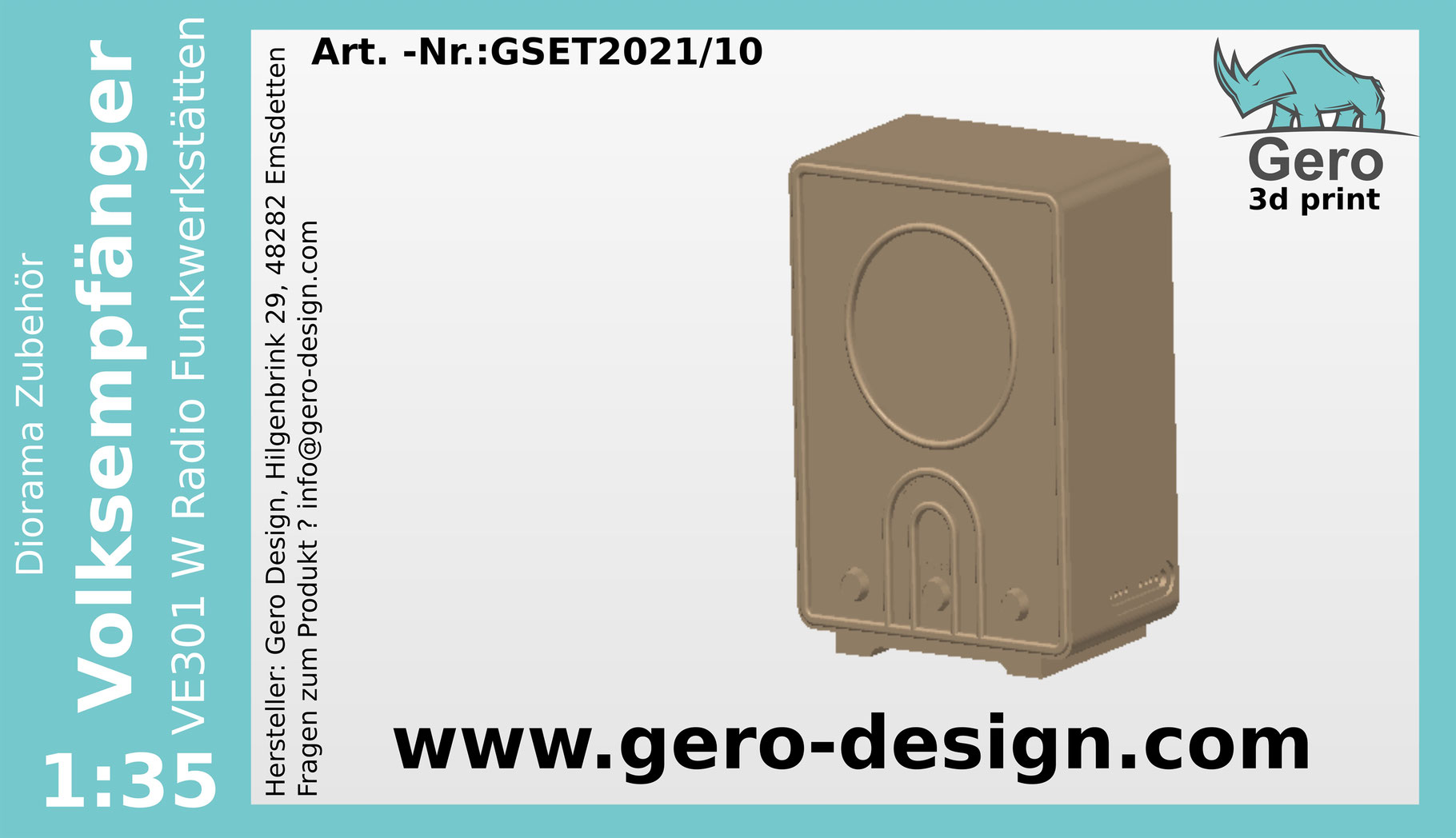
Highly detailed
The Volksempfänger (also known as the “people’s receiver”) was a radio designed to receive medium-wave and long-wave broadcasts. It was introduced in 1933 as part of a mass communication effort in Germany.
It became one of the most widely distributed radios of its time and played a significant role in broadcasting information to the public.
Perfect as a realistic detail piece for historical dioramas and interior scenes.
4,90 €
inkl. MwSt, zzgl. Versandkosten
Versandkostenfrei in folgende Länder: Mehr anzeigen Weniger anzeigen
1 piece
Highly detailed
A potbelly stove is a small, cylindrical cast-iron stove. The flue for the exhaust gases is typically located on the upper side, sometimes vertically mounted.
Due to its design, this type of stove is mainly intended for burning coal, but it can also use other solid fuels such as wood or peat. Inside the cylinder is the firebox with a grate and an ash compartment below, both of which are closed with doors during operation.
Perfect for adding realistic interior detail to buildings, workshops, or historical diorama scenes.
4,90 €
inkl. MwSt, zzgl. Versandkosten
Versandkostenfrei in folgende Länder: Mehr anzeigen Weniger anzeigen
2 pieces (1× open, 1× closed)
Highly detailed
The Enigma (Greek aínigma = “riddle”) was a rotor-based cipher machine used during World War II to encrypt military communications.
It was widely employed by the German Wehrmacht, as well as police, intelligence services, diplomatic services, the SS, and other state organizations for secure communication.
Despite numerous improvements to its encryption system, the Allies eventually succeeded—through significant human and technical effort—in breaking the codes and decoding German radio messages.
Perfect as a highly authentic detail piece for command posts, штаб scenes, or historical WWII dioramas.
5,90 €
inkl. MwSt, zzgl. Versandkosten
Versandkostenfrei in folgende Länder: Mehr anzeigen Weniger anzeigen
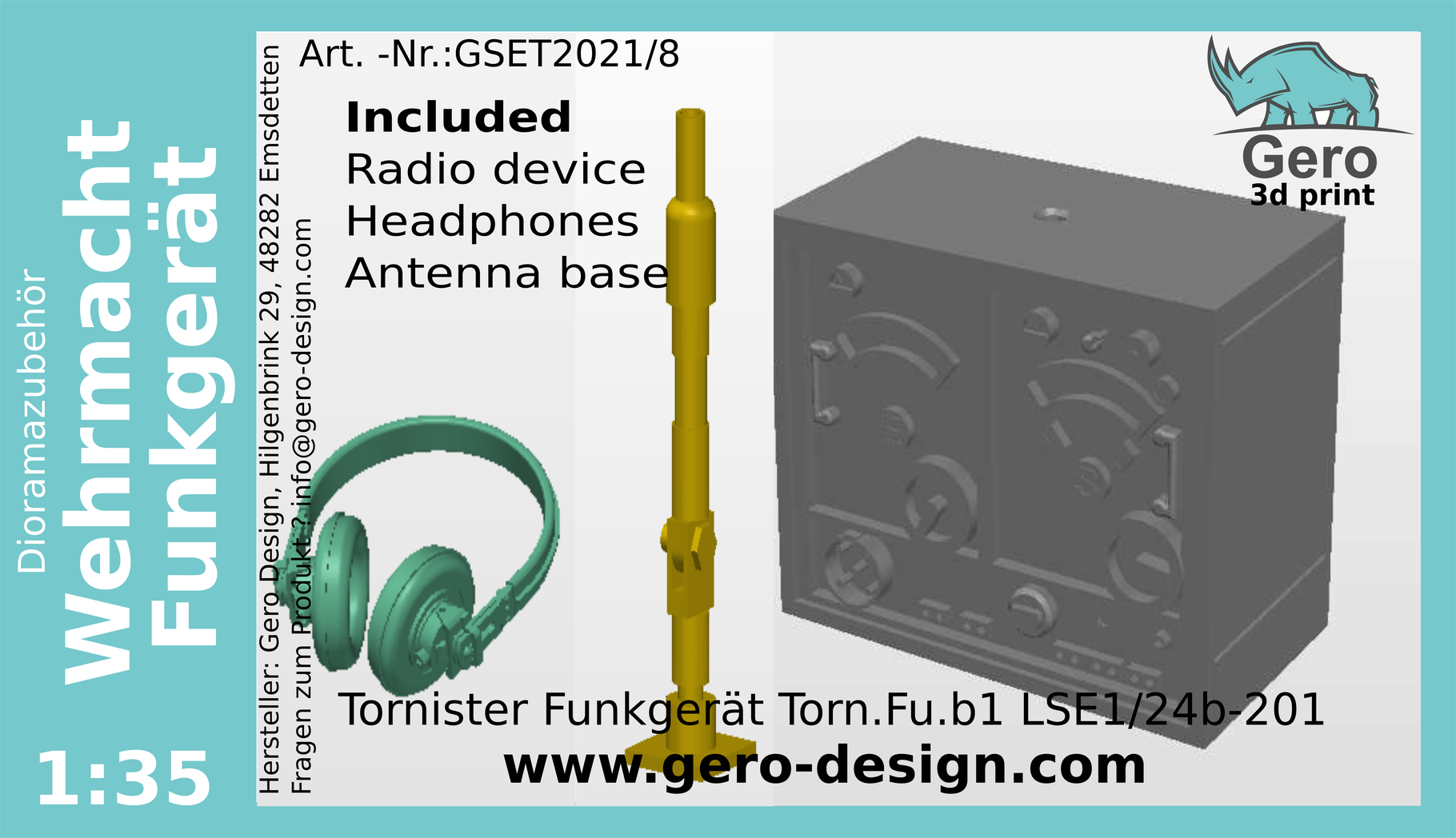
Highly detailed
Mobile command and control in fast-moving warfare would not have been possible without radio communication. The effectiveness of German armored units was strongly supported by the use of transmitters and receivers installed in their vehicles.
Whether for coordination within individual units or for directing entire formations, wireless communication became increasingly important throughout the war, while radio equipment continued to become more compact.
Perfect for adding realistic communication equipment to command posts, vehicles, or WWII diorama scenes.
5,90 €
inkl. MwSt, zzgl. Versandkosten
Versandkostenfrei in folgende Länder: Mehr anzeigen Weniger anzeigen
3 pieces
Highly detailed
Maintaining the mobility of motorized units required enormous amounts of fuel.
During World War II, the German army typically did not transport fuel to the front in large tanker trucks. Instead, fuel was transferred into individual barrels or standardized containers, loaded onto conventional trucks, and delivered to the troops.
Perfect for adding realistic logistics details to vehicles, supply areas, or WWII diorama scenes.
4,90 €
inkl. MwSt, zzgl. Versandkosten
Versandkostenfrei in folgende Länder: Mehr anzeigen Weniger anzeigen
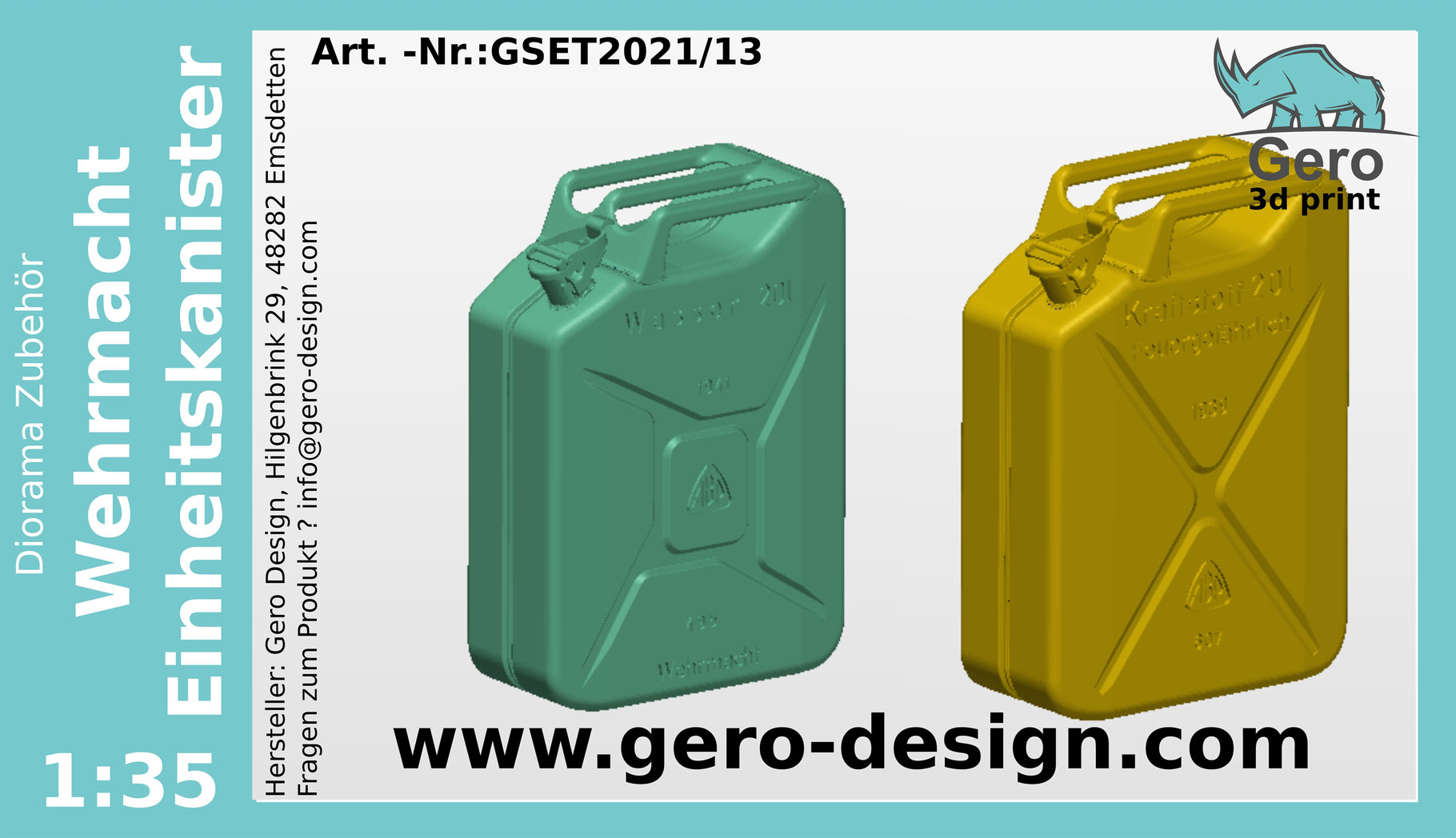
4 pieces (2× fuel 20L + 2× water 20L)
Highly detailed
The Wehrmacht standard jerry can has a capacity of 20 liters.
Developed in the mid-1930s for the German military, it was widely used across European and North African theaters during World War II. The design proved so effective that it is still in use today—commonly known as the “NATO jerry can.”
In English-speaking countries, these containers are often referred to as jerry cans, a term derived from a colloquial nickname for Germans.
Perfect for adding authentic supply and logistics details to vehicles and WWII diorama scenes.
4,90 €
inkl. MwSt, zzgl. Versandkosten
Versandkostenfrei in folgende Länder: Mehr anzeigen Weniger anzeigen